What Does DHZ Mean In Text? Meaning, Uses, Examples & Social Media Guide (2026)
Digital conversations often rely on abbreviations that can leave many feeling perplexed, especially in vibrant communities on platforms like WhatsApp, Snapchat, and TikTok. When exploring what does DHZ mean in text, you’ll discover it’s more than just a trendy slang term; it’s a vital piece of modern communication.
In this guide, you’ll delve into the dhz meaning, uncover its various uses, and see examples that will prepare you to engage seamlessly with others. Stay updated and learn how to incorporate DHZ into your own chats effectively.
What Does DHZ Mean In Text?
DHZ = Don’t Have a Clue. It’s a casual texting abbreviation used to indicate that someone doesn’t know the answer or lacks information on a particular topic. You’ll often see DHZ in informal online conversations across platforms like WhatsApp, Snapchat, Instagram, Discord, and gaming chats, making it a staple in modern communication.
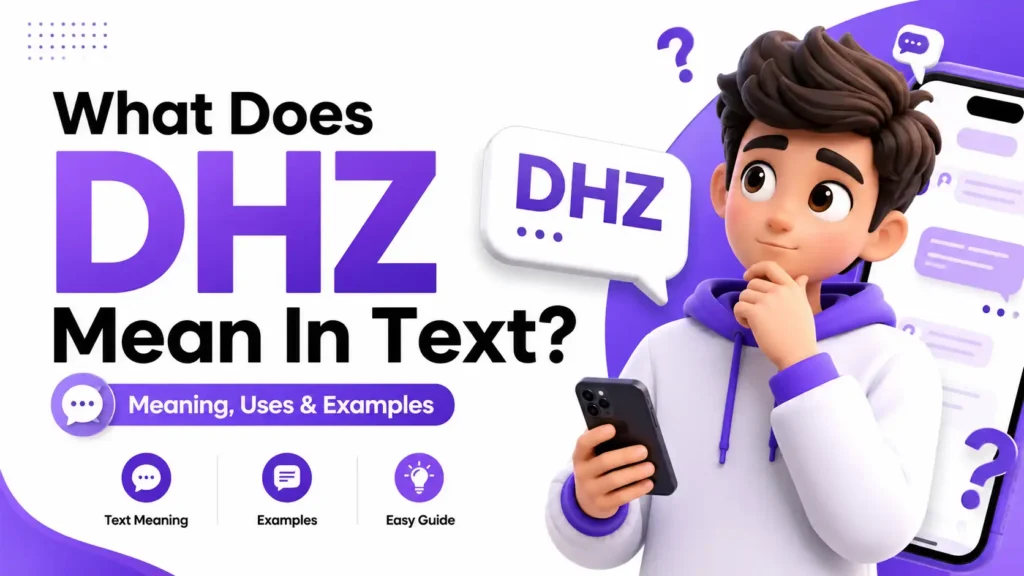
For instance, someone might text, “What’s the weather like tomorrow?” and you could respond, “DHZ, I haven’t checked yet!” This quick shorthand helps to convey a lack of knowledge easily while keeping the conversation light. So, next time you’re unsure about something, remember to use DHZ!
DHZ Meaning In Different Contexts
DHZ can have different meanings depending on the conversation and situation. In texting, it most commonly means “Don’t Have a Clue,” showing uncertainty or a lack of information. Its meaning may change based on the context, such as casual chats, gaming, social media, or online discussions.
DHZ Meaning in Text Messages
In text messaging, DHZ is commonly used to convey a sense of uncertainty. When someone is chatting and doesn’t have the information or knowledge about a topic, they might effortlessly drop this acronym to express that lack of clarity. Specifically, DHZ means “Don’t Have a Clue” in this context.
- Friend: “Do you know where we’re meeting later?”
- Reply: “DHZ, let’s check the group chat.”
- Friend: “What time does the concert start?”
- Reply: “DHZ, I can’t remember!”
- Friend: “Who is the new kid in class?”
- Reply: “DHZ, I haven’t met them yet.”
DHZ Meaning On Snapchat
On Snapchat, DHZ serves a similar purpose, allowing users to express their confusion or ignorance quickly in a casual chat environment. It stands for “Don’t Have a Clue” and fits seamlessly into the platform’s fast-paced communication style, especially during streaks or informal interactions.
- Friend: “Who is in that snap?”
- Reply: “DHZ, I don’t know them.”
- Friend: “Why did you miss the party?”
- Reply: “DHZ, I lost track of the time!”
- Friend: “Did you see that new filter?”
- Reply: “DHZ, I haven’t tried it yet!”
DHZ Meaning On Instagram
Instagram users also leverage DHZ to convey uncertainty in comments, DMs, and direct replies. Here, DHZ continues to indicate “Don’t Have a Clue,” helping users to articulate a light-hearted or humorous expression of being out of the loop.
- Comment: “What do you think of the new season?”
- Reply: “DHZ, I haven’t seen it yet!”
- DM: “Any idea who that influencer is?”
- Reply: “DHZ, I can’t keep up with trends!”
- Friend: “Do you know where this restaurant is?”
- Reply: “DHZ, I’ve never been there.”
DHZ Meaning on TikTok
On TikTok, DHZ emerges frequently in comments or replies, particularly when users are reacting to memes, trends, or challenges. It succinctly conveys their obliviousness or lack of knowledge, maintaining the platform’s engaging and relatable vibe.
- Comment: “Who’s this trending person?”
- Reply: “DHZ, I need to look them up!”
- Comment: “What’s the story behind this video?”
- Reply: “DHZ, no idea!”
- Comment: “Who started this trend?”
- Reply: “DHZ, I just saw it today.”
DHZ Meaning In Gaming Chats
In gaming chats, where rapid communication is crucial, DHZ plays a significant role in expressing confusion or uncertainty during gameplay. It stands for “Don’t Have a Clue,” helping gamers articulate their lack of understanding about strategies, game updates, or events.
- Player: “What’s the best strategy for this level?”
- Reply: “DHZ, I just wing it most of the time!”
- Player: “Who’s that character?”
- Reply: “DHZ, I haven’t unlocked them yet!”
- Player: “Why are we losing?”
- Reply: “DHZ, I don’t even know!”
By understanding DHZ’s meaning in these diverse contexts, users can communicate more effectively and bond over shared moments of uncertainty, enriching their digital conversations.
How To Use DHZ In Conversations
When incorporating DHZ (Direct, Honest, and Zero-Tolerance) principles into your conversations, the key lies in both structure and delivery. Start by establishing a clear intention for the conversation, ensuring that your message aligns with the DHZ framework. This method fosters an environment of transparency and sets the tone for open communication.
Using the DHZ approach allows for deeper connections, as it encourages active listening and empathy. Avoiding vague language and ambiguity ensures that your points resonate with your audience. Moreover, employing DHZ helps to clarify expectations in both personal and professional dialogues, reducing misunderstandings and conflict.
| Context | Application of DHZ |
| Personal | Start with honesty about your feelings, use “I” statements to express emotions clearly, and set healthy boundaries. |
| Professional | Communicate project deadlines clearly, give constructive feedback without unnecessary sugarcoating, and promote accountability. |
| Conflict Resolution | Address issues directly, share your perspective without blaming others, and practice active listening to prevent escalation. |
When Should You Avoid Using DHZ?
When considering when you should avoid using DHZ, it’s crucial to recognize its limitations in professional settings. Work emails, for instance, often require a level of formality and clarity that DHZ may undermine. Using a casual or overly abbreviated approach in these communications could lead to misunderstandings or come off as unprofessional, particularly when addressing superiors or clients.
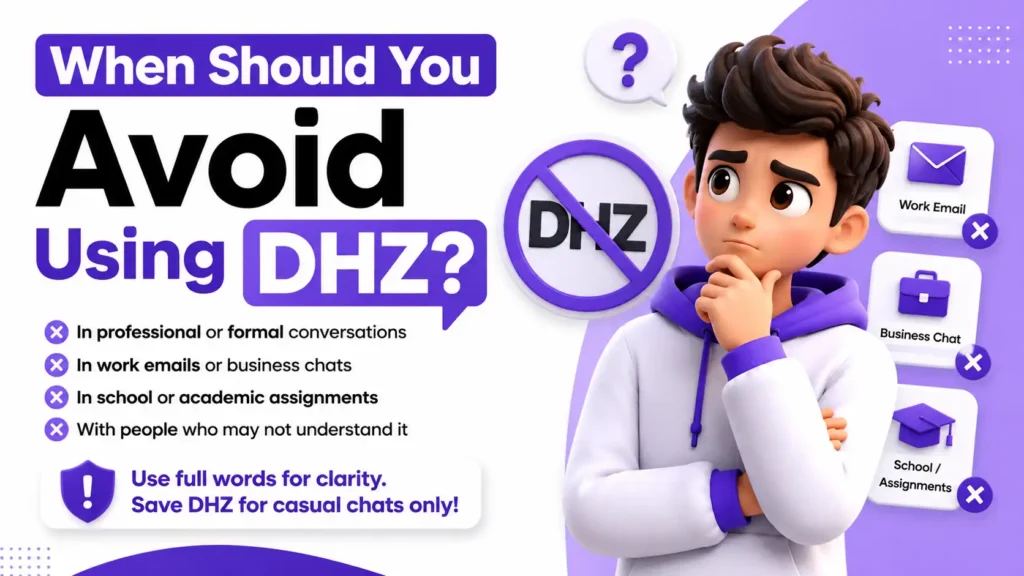
Academic writing, too, demands precision and adherence to established conventions. The use of DHZ in scholarly work can detract from the seriousness of the subject matter and fail to convey the rigor expected in academic circles. In client communication, maintaining a polished, coherent tone is essential for building trust and credibility. DHZ might be perceived as dismissive or careless, potentially jeopardizing valuable relationships.
How to Reply When Someone Says DHZ
When someone uses the acronym “DHZ,” having a quick, thoughtful response can enhance your communication and keep the conversation flowing. Here are some effective replies that demonstrate engagement and openness:
- “No worries.” This shows that you’re relaxed and open to discussing the matter further.
- “Let’s find out.” Encourages a collaborative approach, signaling your willingness to research or explore the topic together.
- “I’ll check.” Proactively suggesting that you can verify details adds credibility to your participation.
- “Same here.” This response creates a sense of camaraderie, indicating that you share their feelings or sentiments.
These kinds of replies not only maintain the conversation’s momentum but also reflect your ability to adapt to various scenarios. By having a repertoire of thoughtful responses, you can navigate discussions more effectively and encourage deeper connections, making conversations more meaningful and productive.
DHZ Full Form Explained
In the realm of online communication, abbreviations like DHZ have gained popularity for their efficiency and convenience. Understanding the DHZ full form helps unveil the nuances of digital language, where brevity reigns supreme. This exploration sheds light on why this acronym has become a staple in casual conversations.
What Does DHZ Stand For?
DHZ most commonly stands for “Don’t Have a Clue” in texting and online conversations. It is used when someone does not know the answer, lacks information, or is unsure about a particular topic. This abbreviation is often used in casual chats, social media messages, and group conversations to quickly express uncertainty.
- Don’t Have Zest
- Don’t Have Zeal
- Doesn’t Have Zip
- Don’t Have Zeitgeist
Why Do People Use DHZ Instead of “I Don’t Know”?
Using DHZ instead of the more laborious “I don’t know” streamlines communication, making interactions snappier. This acronym not only saves time but also encourages faster typing, which aligns perfectly with the fast-paced nature of texting.
As casual texting becomes the norm, slang like DHZ creates a sense of camaraderie among users, fostering a more informal environment. Additionally, the growing prevalence of internet slang allows individuals to express themselves in a way that feels more relatable and jovial, blurring the lines of formal language.
In an age where every second counts, shorthand expressions like DHZ represent a transformative shift in communication styles. The melding of efficiency with friendly banter makes digital conversations more engaging while still being expressive. Understanding the DHZ full form, and its usage, encapsulates this exciting evolution in how we connect.
DHZ Vs Similar Text Abbreviations
DHZ stands out from similar text abbreviations because it expresses uncertainty or a lack of knowledge.
Unlike abbreviations that show confidence, agreement, or extra information, DHZ simply means the person does not know.
DHZ (Don’t Have a Clue)
DHZ, or “Don’t Have a Clue,” indicates a lack of understanding or knowledge about a specific topic. It’s often used in casual texting when someone wants to express their confusion or ignorance about a situation. For example, a person might text, “I DHZ why he’s upset; can someone explain?” This abbreviation allows users to succinctly convey their bewilderment without lengthy explanations.
IMK (In My Knowledge)
IMK stands for “In My Knowledge” and serves as a way to share information based on an individual’s understanding. When someone uses this abbreviation, they imply that the information is subjective and may not be universally applicable. For instance, in a discussion about the best local restaurants, one might say, “IMK, the new Italian place is fantastic!”
FS (For Sure)
FS, or “For Sure,” is a reassurance used in conversations to confirm agreement or express certainty about something. It reinforces a statement or sentiment expressed by another person, making it feel more credible. An example could be someone responding to a plan with, “We should definitely go hiking this weekend. FS!”
BTW (By The Way)
BTW, meaning “By The Way,” serves as a conversational pivot or an introduction to additional thoughts. It allows the speaker to insert extra information without disrupting the flow of discussion. For example, someone might say, “I loved the movie! BTW, have you seen the sequel?”
MB (My Bad)
MB, or “My Bad,” is a casual way to acknowledge a mistake or offer a light-hearted apology. It’s often used in informal situations to defuse tension or show accountability without being overly serious. Someone might say, “I thought the meeting was at 10; MB for being late!”
ISK (Context-Based Meaning)
ISK stands for “I Still Know,” but its meaning can shift dramatically based on the context of the conversation. Its flexibility allows it to take on different interpretations, making it crucial to read the surrounding dialogue. For instance, during a trivia game, someone might say, “ISK who the actor is; he was in that famous movie!” Here, ISK expresses confidence in their knowledge about a specific subject, illustrating its contextual adaptability.
In the landscape of DHZ vs. Similar Text Abbreviations, each term serves a distinct purpose. While DHZ expresses a lack of knowledge, IMK conveys a subjective opinion, emphasizing personal experience. FS confirms agreement, creating a shared positive space, while BTW introduces tangential thoughts fluidly.
Common Mistakes When Using DHZ
When it comes to communicating with DHZ, several common mistakes can hinder effective interaction. Here are six pitfalls to watch out for:
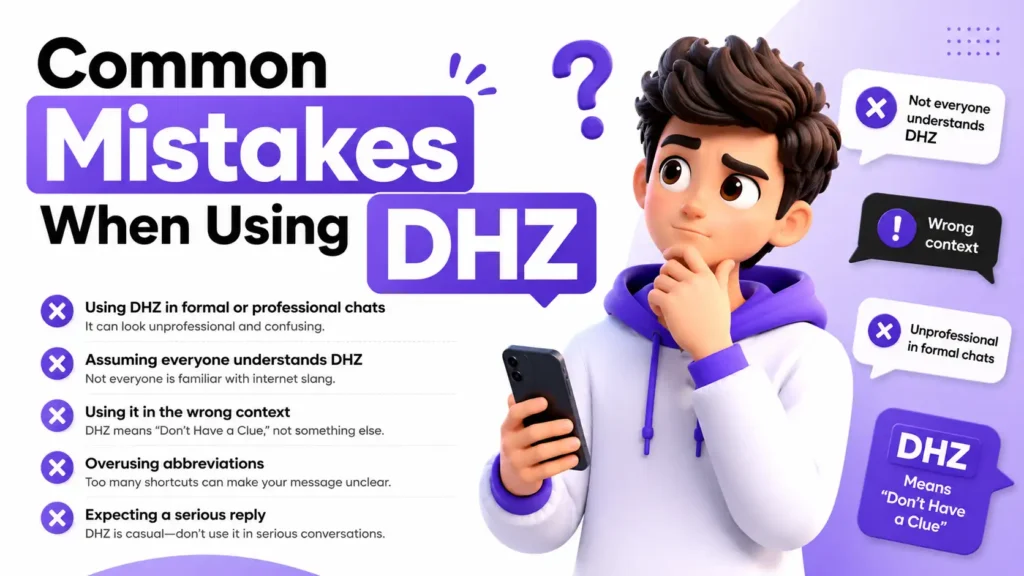
- Using it in formal communication: DHZ should be reserved for casual exchanges. Incorporating it into professional emails or presentations can come off as unprofessional.
- Assuming everyone understands it: Not everyone is familiar with DHZ jargon; assuming knowledge can alienate or confuse your audience.
- Overusing slang: While slang can inject personality into conversation, excessive use can make your message unclear or seem insincere.
- Ignoring context: The meaning of DHZ can change drastically based on context. Failing to provide the right background can lead to misunderstandings.
- Neglecting audience demographics: Different age groups and cultures may interpret DHZ differently; tailoring your language can enhance clarity.
- Forgetting to adapt: Relying solely on DHZ may lead to a lack of engagement. Prioritize genuine communication and adjust your style as needed.
By being mindful of these common mistakes when using DHZ, you can foster better understanding and connection in your conversations. Each interaction is an opportunity to connect, so approach it with care.
Conclusion
Comprehending what does DHZ mean in text provides valuable insight into today’s communication landscape. The dhz meaning in slang highlights its practicality, allowing users to convey messages quickly and with humor. As social media continues to evolve, staying informed about such acronyms can significantly improve your online interactions.
By incorporating terms like DHZ into your vocabulary, you’ll not only sound more relatable but also engage more fully with your audience. Embrace the language of the digital age and keep your communication fresh and relevant.
FAQS
What Does DHZ Mean?
In texting, DHZ is not a widely recognized slang abbreviation. Some users may use it as a personal shortcut, typo, or community-specific term. The meaning depends on the context where it appears.
What Does DH mean In Texting?
In texting, DH commonly means “Dear Husband” or “Don’t Have” depending on the conversation. It is often used on social media, forums, and casual chats.
What Does DZ Mean In Slang?
In slang, DZ can have different meanings depending on the platform or community. It may refer to a nickname, abbreviation, or a term specific to a certain group, so the surrounding conversation is important.
What Is DHZ On Instagram?
On Instagram, DHZ does not have a standard meaning. It may be a username abbreviation, trend-specific slang, or a typo. Checking the post, caption, or comments can help identify its meaning.
What Does DHS Mean In Slang On TikTok?
On TikTok, DHS can have different meanings depending on the trend or creator. It is not a universally fixed slang term, so the meaning depends on the video context and how it is being used.