What Does AWL Mean In Text? Full Meaning, Uses & Examples Explained
The digital age has brought a whirlwind of acronyms into our everyday conversations, and AWL is one that often pops up but may leave you confused. What does AWL mean in text, and why is it essential to know? With multiple meanings that shift based on the context, understanding this abbreviation can enhance your texting experience.
In this article, we’ll unravel everything from what AWL stands for to its usage and common misinterpretations. Get ready to master what does awl mean in texting and feel more confident in your online chats!
What Does AWL Mean In Text?
AWL stands for “Ain’t We Litt?” in text messages, often used among friends to express a sense of camaraderie or shared sentiment. This abbreviation can convey excitement or agreement, making conversations feel more informal and friendly.
The meaning of AWL can vary based on context. In some instances, it may refer to “All’s Well,” signaling that everything is fine. For example, one might text, “AWL with the plans for tonight?” or a reassurance like, “AWL, no worries about the test.” Understanding these nuanced meanings can enhance your texting experience, making it more engaging and relatable.
What Does AWL Stand For?
Exploring the meaning of AWL reveals a few distinct interpretations, each serving different contexts. In casual conversations, particularly among younger audiences, AWL has emerged as a popular linguistic shortcut, enriching the digital dialogue.
AWL Means “A Whole Lot”
In the realm of texting, AWL stands for “A Whole Lot,” conveying a vast amount or degree in a concise form. This playful abbreviation has gained traction because it succinctly expresses enthusiasm or intensity, often enhancing the emotional tone of messages. Its usage frequently appears in everyday conversations, making interactions feel more expressive and relatable.
Examples include:
- “I miss you AWL!”
- “This project is taking AWL my time.”
- “I love you AWL.”
- “AWL this studying is exhausting.”
- “We had AWL the fun at the party!”
- “I appreciate you AWL so much!”
AWL Means “All Work Life”
Another interpretation of AWL is “All Work Life,” which surfaces in discussions about work-life balance. This phrase encapsulates the challenges and commitments that individuals face, emphasizing the importance of integrating personal life with professional responsibilities. It’s often used when people seek to express their experiences or frustrations regarding their work-life dynamics.
Examples include:
- “I’m finding it hard to handle my AWL.”
- “Let’s focus on achieving a better AWL.”
- “Managing AWL can be overwhelming sometimes.”
- “She’s dedicated her AWL to her career.”
AWL Means “At Will”
Less common in texting, AWL can also mean “At Will,” denoting actions that are performed freely and without restrictions. This term frequently pops up in professional or philosophical discussions, highlighting the notion of autonomy within decision-making.
Examples include:
- “You can make changes AWL to the project.”
- “Employees are considered at will in this company.”
- “At will agreements allow flexibility.”
- “You can cancel your subscription AWL.”
How Is AWL Used In Texting?
AWL, which stands for “Awkward Laugh,” has become a staple in texting apps like WhatsApp, Snapchat, Instagram, Messenger, and Discord. Its usage has evolved beyond mere text shorthand, serving as a digital expression of humor or discomfort.
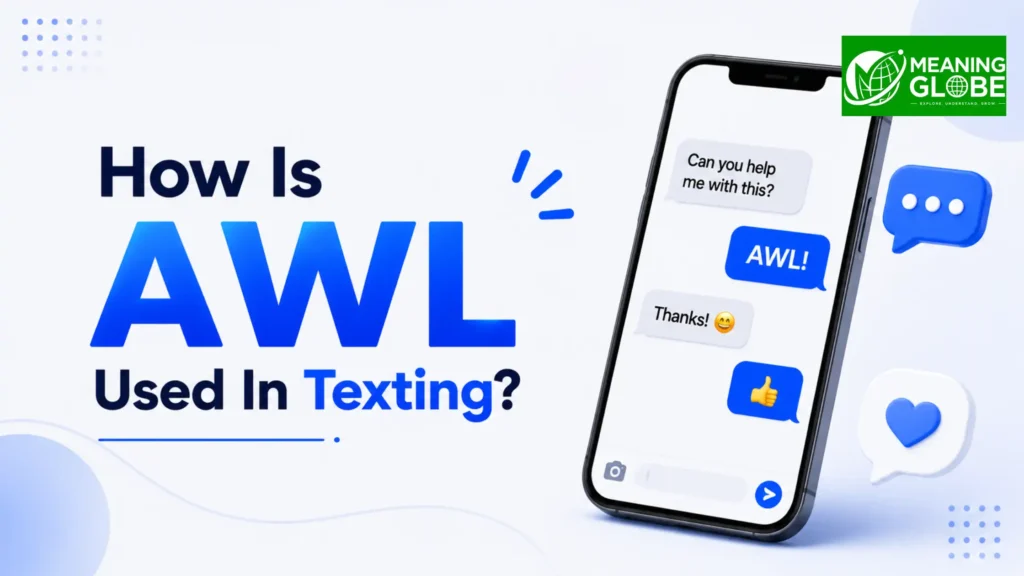
In group chats, AWL can diffuse tension after an awkward remark:
Friend 1: “I sent that embarrassing photo to my boss!”
Friend 2: “AWL”
Similarly, it can subtly express disbelief:
Partner: “I forgot to book our tickets!”
You: “AWL! Are you serious?”
In gaming discussions, it serves as a playful jab:
Teammate: “I just fell off the map.”
You: “AWL, classic you!”
From family chats to formal SMS exchanges, AWL bridges the gap between humor and awkwardness, adding a layer of relatability to our digital communications.
Real-Life Examples Of AWL In Text
In everyday interactions, the Academic Word List (AWL) weaves itself into various scenarios, enriching conversations and enhancing clarity. For instance, during a group chat, one might say, “We need to analyze our strategy for the upcoming project.” Here, “analyze” reflects a deeper level of thinking and evaluation. Similarly, a family member might mention, “I appreciate your effort in organizing the event,” where “appreciate” acknowledges contributions and fosters gratitude.
“I will participate in the debate to improve my public speaking skills,” emphasizing engagement and personal development. Meanwhile, in the workplace, an employee could assert, “It’s essential to maintain a cohesive team dynamic,” with “essential” highlighting the importance of collective harmony. Gaming conversations also utilize AWL, as seen when a player remarks, “We need to devise a more effective strategy to win,” where “devise” indicates planning and creativity.
When Should You Use AWL?
AWL is best suited for casual texting, online chats, gaming, and social media interactions where brevity and informality prevail. Its playful nature fits perfectly with platforms where quick exchanges are the norm, allowing for efficiency without sacrificing meaning.
Understanding the conversation context is crucial when using AWL. In professional settings or serious discussions, its casual tone might not resonate well, potentially leading to misunderstandings. Aligning language style with the audience and the platform enhances communication effectiveness, ensuring messages are received as intended. Always gauge your environment before unleashing the AWL.
When Should You Avoid Using AWL?
Avoiding the use of abbreviations like AWL is crucial in formal settings such as business emails, job applications, and academic writing. Writing out the full phrase ensures clarity and professionalism, enhancing your credibility in communication. This approach reflects attention to detail and respect for your audience, fostering a more positive perception..
Common Mistakes When Using AWL
When utilizing AWL (Academic Word List), several common mistakes can undermine effective communication. Here are key pitfalls to watch for:
- Misunderstanding Meaning: Many users misinterpret the nuances of AWL terms, leading to incorrect usage in context.
- Formal Writing Misapplication: AWL is intended for academic contexts, but people sometimes misuse it in less formal settings, which can come off as pretentious.
- Overusing Abbreviations: Frequent reliance on abbreviation can confuse readers unfamiliar with AWL, detracting from clarity.
- Assuming Universal Understanding: Not everyone is acquainted with AWL terminology, so it’s unwise to assume your audience fully comprehends these terms..
Alternatives to AWL
When seeking alternatives to AWL, consider the context to enhance your expression. For instance, “a lot” is a straightforward choice for casual conversations, while “loads” carries a more informal and enthusiastic tone, perfect for lively discussions. If you want a more academic flavor, “numerous” adds a touch of sophistication, making it suitable for reports or presentations.
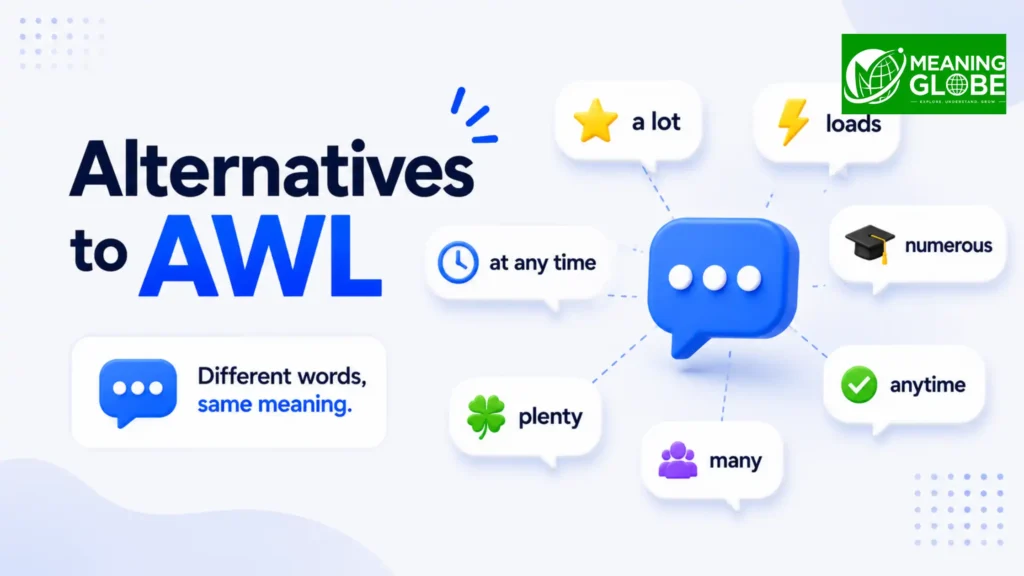
In situations where flexibility is key, phrases like “at any time” or “anytime” are excellent for emphasizing availability or spontaneity. “Plenty” can be ideal when conveying abundance without sounding overly formal. For instance, when discussing options or resources, using “many” or “numerous” can provide clarity and precision. By selecting the right alternative, you can effectively tailor your message and engage your audience more meaningfully.
Similar Text Abbreviations
In the fast-paced world of digital communication, similar text abbreviations like LOL, BRB, TBH, and IMO have transformed the way we express emotions and convey messages rapidly. LOL (laugh out loud) indicates amusement, while BRB (be right back) signals a brief departure. TBH (to be honest) adds transparency to conversations, and IMO (in my opinion) provides a personal touch to discussions.
Other popular abbreviations like IKR (I know, right?), NVM (never mind), and SMH (shaking my head) offer quick responses to shared experiences, showcasing relatability and camaraderie. Additionally Wya (Where Are You At?) invites engagement, while IDK (I don’t know) expresses uncertainty.
Conclusion
Grasping what AWL means in text helps you navigate the nuances of modern communication and enhances your overall texting experience. The term stands for “A Whole Lot,” signifying an abundance in a casual context, which can be particularly useful in group chats or social media.
By understanding phrases like “what does AWL mean in text” or “what do AWL mean in text,” you become more attuned to the lingo of your peers. This knowledge isn’t just about understanding the term itself, but also about staying relevant in digital conversations. Embrace these language trends to elevate your texting interactions and connect more deeply with those around you.
FAQS
What Does AWL Mean In Text?
In text, AWL can have different meanings depending on the conversation. The most common meaning is “A Whole Lot,” which people use to emphasize a large amount of something, such as “I miss you AWL.” In some situations, AWL may also stand for “All Work Life” or “At Will.”
What Does AWL Mean In A Text?
In a text message, AWL usually means “A Whole Lot.” It is used in casual conversations to express a large quantity or strong feeling. However, in certain discussions, AWL can also mean “All Work Life” or “At Will.” Reading the surrounding conversation helps you understand which meaning is intended.
What Does AWL Mean In Text Message?
In a text message, AWL is an abbreviation that most commonly stands for “A Whole Lot.” People use it to save time while texting friends or chatting on social media. Depending on the context, AWL may also mean “All Work Life” or “At Will.”