What Does HBU Mean in Text? Meaning, Examples, Snapchat & Texting Guide (2026)
Texting has its own unique language, and among the most prevalent abbreviations you’ll encounter is HBU. If you’re wondering, What Does HBU Mean in Text? It stands for “How About You?” and frequently pops up in casual conversations across platforms like Snapchat and Instagram.
Knowing the HBU meaning can make your digital exchanges smoother and more engaging. This article will dive into how this simple acronym plays a significant role in texting etiquette, along with examples and tips for incorporating it into your chats.
What Does HBU Mean In Text
HBU stands for “How About You?” and is a popular texting abbreviation that effectively keeps the conversation flowing. It’s particularly useful in casual chats, as it invites the other person to share their thoughts or experiences, creating a more engaging interaction.
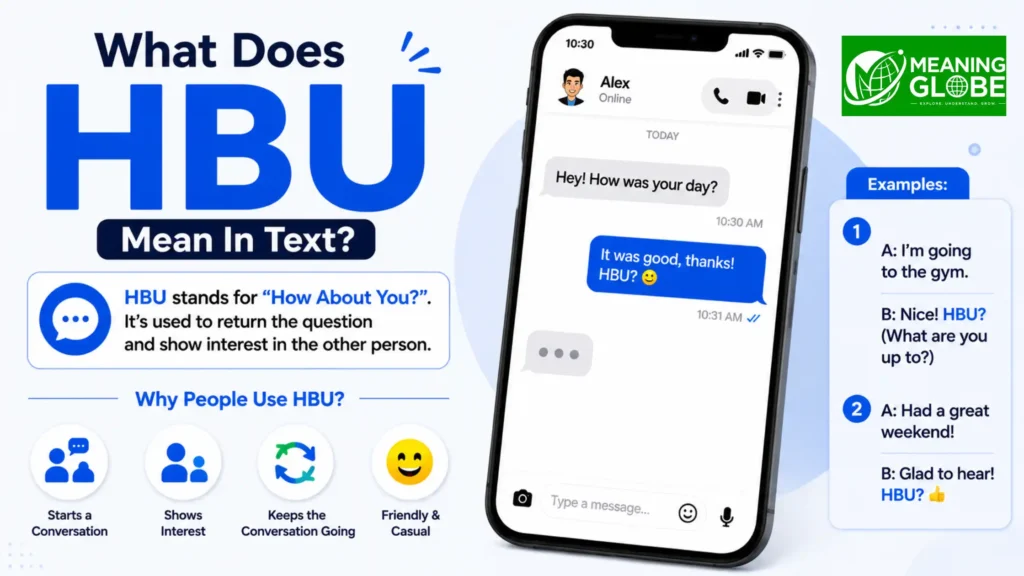
For example, if someone shares how their day went and you reply with “HBU?”, you’re not just acknowledging their message but also prompting them to share more. Understanding what HBU means in text can significantly enhance your online communication, making it more dynamic and personable.
HBU Full Form And Meaning
HBU stands for “How About You?” and is commonly used in casual conversations to invite the other person to share their thoughts or experiences. This friendly phrase helps keep chats interactive and encourages reciprocal dialogue, making discussions feel more engaging and balanced.
People often use HBU as a follow-up after sharing their own news, opinions, or updates, allowing for a smooth flow in conversation. For instance, someone might say, “I just started reading a new book. HBU?” or “I had a great weekend at the beach. HBU?”
These examples highlight how HBU fosters connection and keeps the conversation lively, making it a favorite in both text and face-to-face interactions.
What Does HBU Mean In Texting?
It serves as a conversational bridge, especially after someone shares their thoughts or experiences. After answering a question, such as “I just got back from vacation,” a follow-up like “HBU?” invites the other person to share their own experiences or opinions.
In various scenarios, HBU can enhance engagement. For example, if a friend texts, “I just finished a great book!” responding with “That’s awesome! HBU?” encourages sharing. Similarly, if someone mentions, “I had a busy day at work,” replying with “I get that! HBU?” initiates a deeper dialogue about daily experiences.
What Does HBU Mean On Snapchat?
Users favor this shorthand to keep conversations flowing, especially during streaks or when time is limited. Its brevity caters to the fast-paced nature of social media interactions, allowing for quick responses without compromising the essence of the conversation.
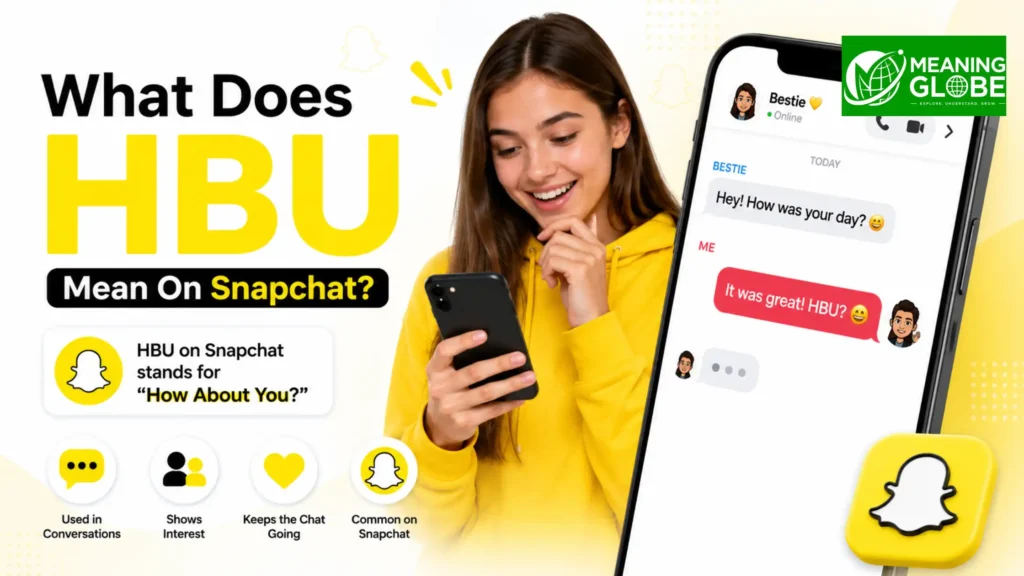
For instance, if one friend shares their plans for the weekend, they might ask, “I’m hitting the beach, HBU?” This not only bridges the conversation but also invites a reciprocation of thoughts.
Another example could be during a chat about schoolwork: “I just finished my assignment HBU?” Such exchanges highlight the utility of HBU, making conversations more efficient while sustaining the friendly vibe typical of Snapchat interactions.
How Do You Reply To HBU?
Responding to “HBU?” (short for “How ‘Bout You?”) can sometimes feel daunting, but it’s a great conversation starter that invites connection. The key is to tailor your reply to keep the flow natural and engaging, whether you’re aiming for a casual vibe or a flirtatious exchange. Here are some suggested responses that can help you navigate through a casual or flirty conversation effortlessly.
Casual Replies
Not much, just catching up on some shows!
This reply is relatable and opens the door for a conversation about favorite series or recommendations.
Just finished work and thinking about dinner.
Sharing a bit about your day provides clarity while inviting them to share their current situation as well.
Just hanging out at home; what’s up with you?
This response is inviting and encourages them to elaborate on their own activities.
Just chilling, trying to decide what to do today.
This reply invites suggestions and fosters a friendly exchange about weekend plans or activities.
Trying to decide if I should hit the gym or binge-watch a new show!
This playful dilemma not only shares something personal but also allows for a light discussion on fitness vs. relaxation.
Flirty Replies
Thinking about how to get your attention!
A playful twist that sparks interest while showing you’re thinking about them.
Just daydreaming about our next adventure together.
This hints at a desire to spend time together, adding a flirty element while keeping it light.
Just wishing you were here to make it more fun!
This reply makes your intention clear, encouraging them to join in the fun.
Not much, just counting the minutes until I can see you again.
This response is sweet while creating anticipation for your next meeting.
Just trying to think of a clever way to impress you!
Engaging in playful banter while showing interest can lead to a fun conversation.
How To Use HBU Correctly
Using HBU (How About You) correctly in conversations can significantly enhance engagement. Typically, it’s placed after your response, allowing the dialogue to flow naturally. This technique not only shows interest but also encourages the other person to share their perspective, keeping the conversation balanced.
In practice, here’s how it works:
Example 1: “I had a great weekend hiking in the mountains. HBU?”
Example 2: “I really enjoyed that movie; the storyline was captivating. HBU?”
Example 3: “Work has been busy but rewarding lately. HBU?”
In each case, placing HBU at the end invites the other person to contribute their thoughts and experiences, fostering a more dynamic and reciprocal exchange. Embrace this method to ensure your conversations remain interactive and engaging.
When Should You Use HBU?
HBU is a versatile acronym that can enhance conversations in casual settings. Among friends or during social gatherings, using HBU opens up avenues for playful banter and genuine connection.
For instance, after sharing a recent adventure, you might ask, “I went hiking last weekend, HBU?” to prompt a fun exchange about shared interests or recent experiences.
In academic or gaming contexts, HBU fosters collaboration and camaraderie. While discussing a group project with classmates, it becomes a quick way to gauge others’ input: “I think we should focus on the research. HBU?” Similarly, in gaming, it can keep the mood light between players: “I just leveled up, HBU?”
When Should You Avoid Using HBU?
HBU, while casual and friendly, can jeopardize clarity and professionalism in contexts like business emails and academic writing. In these settings, the goal is often to convey information succinctly and respectfully; phrases like “HBU?” may come across as too informal and may not align with the expected tone. Instead, consider alternatives such as “How about you?” or “What are your thoughts?” to maintain professionalism while still inviting engagement.
In job applications and formal communication, the use of HBU can inadvertently undermine the seriousness of your message. Potential employers or academic committees appreciate clear, direct language that highlights respect and sincerity. Opting for more conventional phrases not only elevates your communication but also demonstrates your awareness of professional norms.
HBU Vs WBU: What’s the Difference?
In the digital age of communication, abbreviations like HBU (How About You) and WBU (What About You) have become commonplace. While they serve similar purposes in conversations, subtle differences in usage and tone can enrich our interactions.
WBU tends to initiate responses in a more neutral tone, functioning as a straightforward transitional phrase. It’s often utilized to shift the focus back to the other speaker without the personal touch that comes with HBU. A suitable instance could be, “I’m planning a weekend getaway; WBU?”
| Slang | Meaning | Example |
|---|---|---|
| HBU | How About You | I’m good. HBU? |
| WBU | What About You | I’m staying home. WBU? |
| HRU | How Are You | HRU today? |
| WYD | What You Doing | WYD tonight? |
Common Examples Of HBU In Conversations
See how HBU (How About You?) is naturally used in everyday chats with friends, family, coworkers, and on social media. These real-life examples will help you understand the right context and reply confidently.
Friends
Conversation 1:
Alex: Hey, did you catch the game last night?
Jordan: Yeah, it was epic! HBU?
Conversation 2:
Maya: I’m thinking about grabbing some sushi later. Want to join?
Liam: Sounds great! HBU after that?
Crush Or Dating
Text Conversation 1:
Ella: I just finished a painting! Can’t wait for you to see it.
Zach: I’m excited to see it! HBU this weekend?
Text Conversation 2:
Sophie: Just got out of a long meeting.
Jake: Ugh, I feel you. HBU for a coffee later?
Family
Mom: How was school today?
Sam: It was good! Just a bunch of quizzes. HBU?
Gaming
Chad: Just leveled up! Ready for our raid?
Jamie: Absolutely! HBU on strategies for the boss fight?
How To Reply To HBU
When someone asks “HBU?” your response should feel natural and flowing. You can share what you’re up to, ask the same question back, or even expand by sharing a related story or detail. Keeping the conversation engaging will show your interest and encourage further dialogue, making your interactions more lively and dynamic.
Exploring HBU In Everyday Conversations
Utilizing “HBU” in various conversation contexts shows the versatility of this phrase. In friendships, it fosters a collaborative feel, encouraging interaction while checking in on each other’s lives. The casual nature of “HBU” makes it particularly effective in less formal contexts, where the goal is mutual engagement and camaraderie.
In romantic settings, “HBU” can deepen emotional connections by steering the conversation toward personal experiences and shared interests. It indicates not just awareness of the other person but also excitement and curiosity about their life, making it an excellent flirtation tool.
Common Mistakes People Make With HBU
By recognizing these common mistakes people make with HBU, you can enhance your communication skills. Being mindful of your audience and context is vital in determining when to use casual language.
- Using HBU in Formal Communication: HBU, or “How About You,” is too casual for business emails or official correspondences, potentially undermining professionalism.
- Overusing HBU: Excessive use can dilute its meaning, making conversations feel trivial. Moderation is key to keeping the phrase impactful.
- Lack of Context: Dropping HBU into conversations without providing context can confuse the recipient, especially if they don’t know the topic being discussed.
- Assuming Shared Understanding: Not everyone is familiar with abbreviations like HBU. Relying on it without gauging familiarity can alienate or frustrate your audience.
- Misusing in Response to Serious Topics: Using HBU when discussing serious or sensitive issues can come off as dismissive and undermine the gravity of the conversation.
- Ignoring Tone and Medium: HBU can have different implications depending on the medium; texting might be acceptable, but it could sound flippant in voice messages or social media.
Similar Texting Slang You Should Know
In the fast-paced world of digital communication, mastering texting slang can keep your conversations quick and engaging. Here’s a look at some similar texting slang you should know that can enhance your texting game.
HBU: Short for “How About You?” This abbreviation is often used to reciprocate a query, signaling interest in the other person’s thoughts or activities, making your conversation feel more interactive and engaging.
WBU means “What About You?” This term serves a similar function, allowing you to pivot the focus of the conversation to the other party while maintaining a casual tone that makes chatting easygoing.
HRU: Shortened from “How Are You?” This abbreviation expresses interest in the other person’s well-being. It’s a friendly check-in that sets the tone for a comfortable dialogue.
WYD: This stands for “What You Doing?” A casual way to ask about someone’s current activities, it encourages spontaneity in conversations and helps bridge the gap between boredom and engagement.
BRB Mean “Be Right Back,” this term is perfect for letting someone know you’ll be away for a moment. It signals to your texting partner that the conversation isn’t over, but just temporarily on hold.
LMK: An abbreviation for “Let Me Know,” it invites the recipient to share updates or thoughts at their convenience, promoting ongoing interaction and involvement in the conversation.
TTYL: Short for “Talk To You Later,” this casual farewell keeps the door open for future conversations, conveying that you look forward to chatting again.
IMY: Stands for “I Miss You,” expressing emotions in a succinct way. It helps convey warmth and affection, deepening your connection with the recipient.
ASL means “Age, Sex, Location,” this abbreviation often pops up in casual conversation to break the ice. It’s a quick way to gather some basic social context, making discussions flow more smoothly.
Incorporating these abbreviations into your texting can streamline your communication and add a layer of familiarity, making conversations feel more personal and engaging.
Conclusion
Understanding What Does HBU Mean in Text can enhance your communication in digital conversations. It serves as a casual inquiry into the other person’s feelings or situation, making it a useful phrase in texting, especially on platforms like Snapchat.
As you navigate through texts, incorporating “HBU” can make exchanges more engaging and personal. Remember to consider the context in which you’re using it, as familiarity with your audience can dictate its effectiveness.
FAQs
What Does HBU Mean on Snapchat?
On Snapchat, HBU means “How About You?” It is frequently used in chats, streaks, and quick replies to keep conversations flowing. Snapchat users prefer abbreviations like HBU because they save time while making chats feel more interactive and friendly.
What Does It Mean When a Girl Says HBU?
When a girl says HBU, she is usually asking “How About You?” after sharing something about herself. In most cases, it simply keeps the conversation going.
Does HBU Have Multiple Meanings?
In everyday texting, HBU almost always means “How About You?” While there are a few uncommon alternative meanings in specific communities, the texting definition is by far the most widely used. On Snapchat, WhatsApp, Instagram, and text messages, HBU almost always refers to “How About You?”
What Is HBU in Messages?
In messages, HBU is the short form of “How About You?” People use it to return a question after answering one themselves. It encourages the other person to share their thoughts, feelings, or opinions and helps keep the conversation balanced.
Is HBU the Same as WBU?
HBU and WBU have nearly the same meaning. HBU stands for “How About You?” while WBU means “What About You?” Both are used to ask for the other person’s response or opinion, although HBU often sounds slightly more conversational and natural.